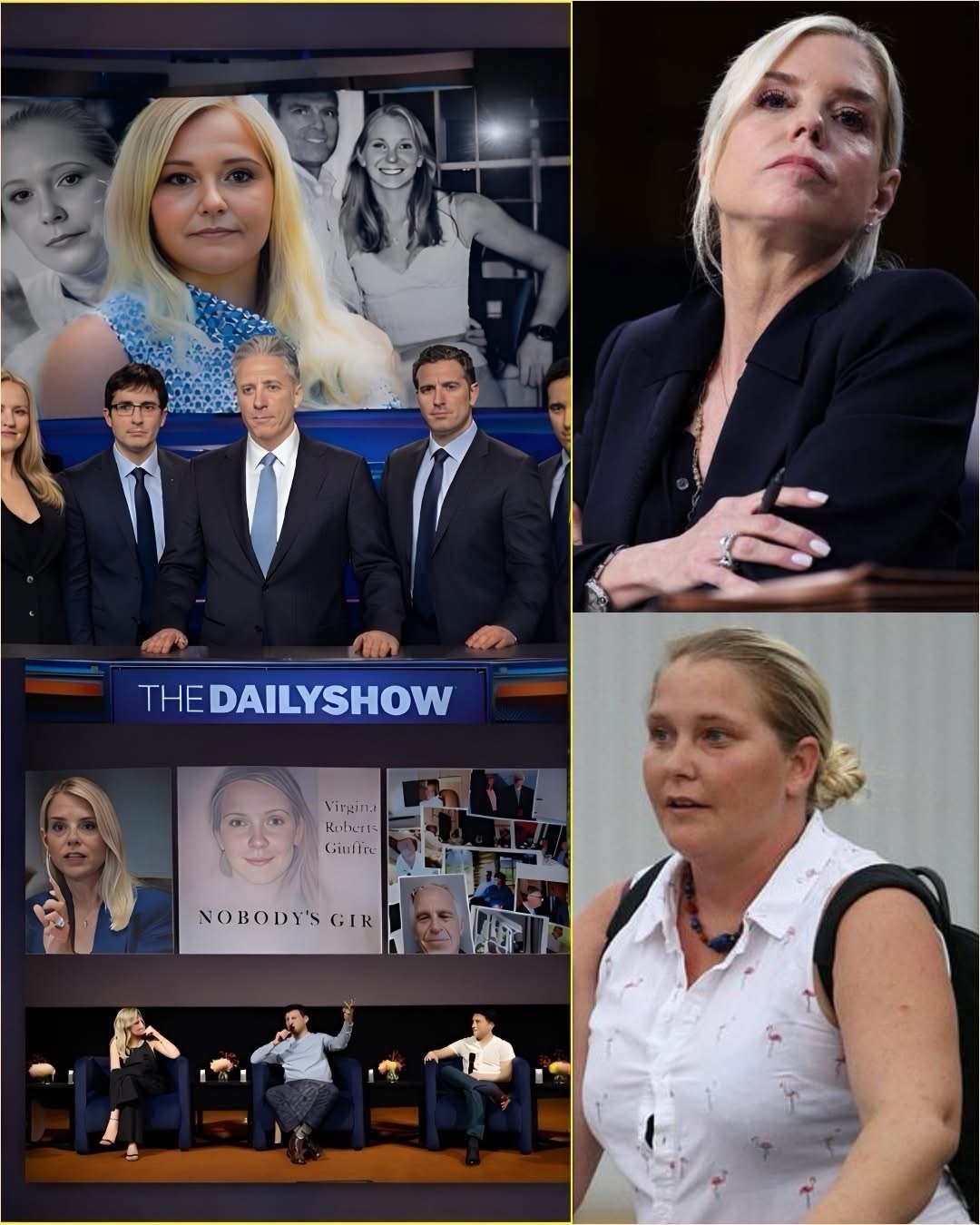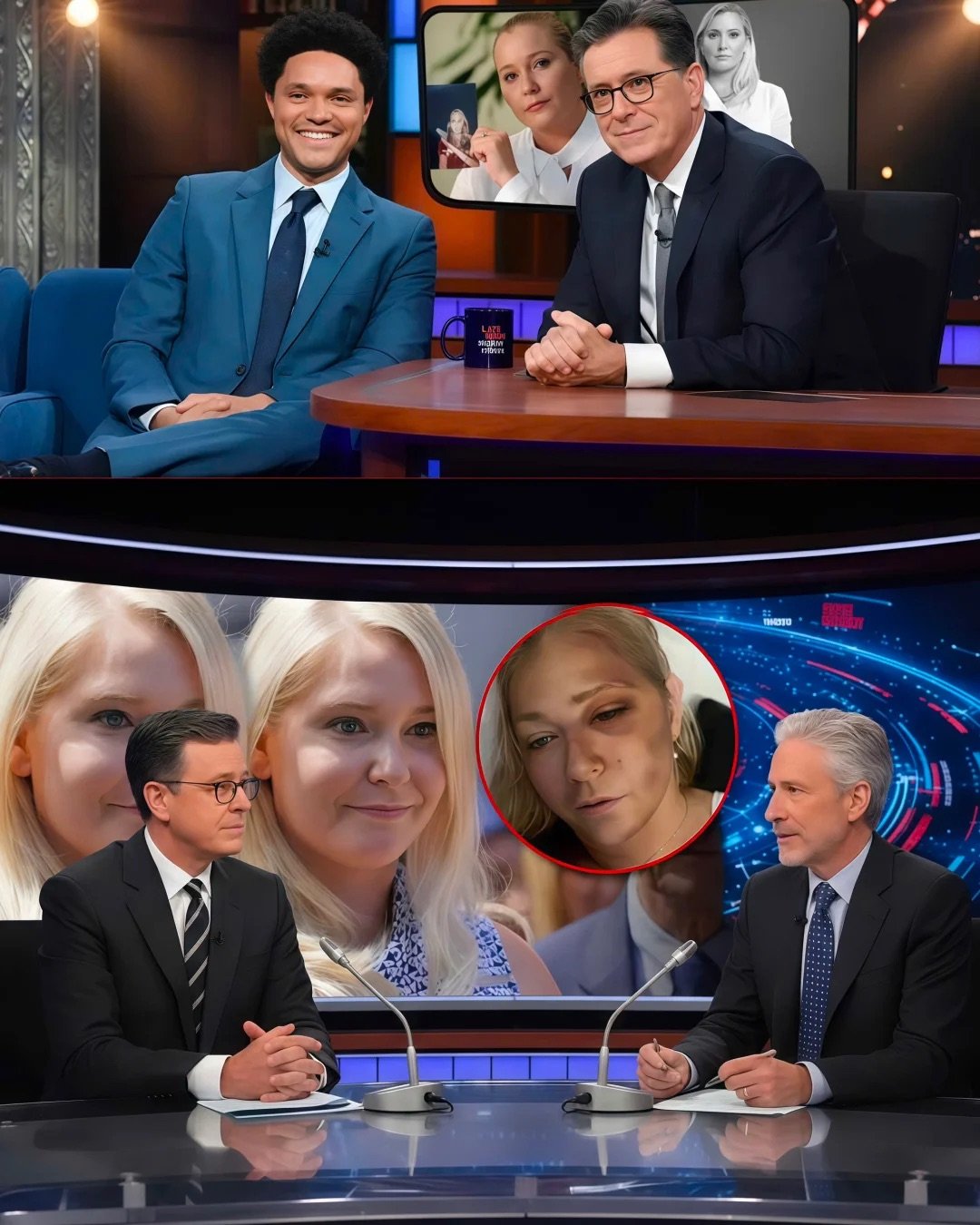
Stewart. Noah. Colbert. Kimmel.
For years, these names were synonymous with laughter, satire, and late-night relief. But now, they represent something far more unsettling to those in power. They are no longer just defending free speech. They have rewritten what “the truth of news” looks like — after uncovering answers surrounding her departure. As of this moment, the event has drawn more than 1.3 billion views, transforming a cultural ripple into a global media shockwave.
What began as what appeared to be an isolated suspension quickly became something much larger. A decision that was expected to quiet a single voice instead triggered a rare and unexpected alignment. Four of the most influential satirical figures in America stepped outside the boundaries of late-night entertainment, set aside rivalry, and emerged as allies confronting silence itself. This was not a crossover episode, not a publicity stunt, and not a calculated brand collaboration. It was a rupture.
No television network planned it.
No advertiser was willing to attach their name to it.
And the public was not warned in advance.
Yet millions — and then hundreds of millions — watched as the familiar rhythm of jokes and monologues gave way to something more dangerous: questions that had been avoided for years, fragments of information long treated as untouchable, and a narrative surrounding her departure that refused to stay buried. In the absence of a traditional newsroom’s approval, a new kind of media moment was born.