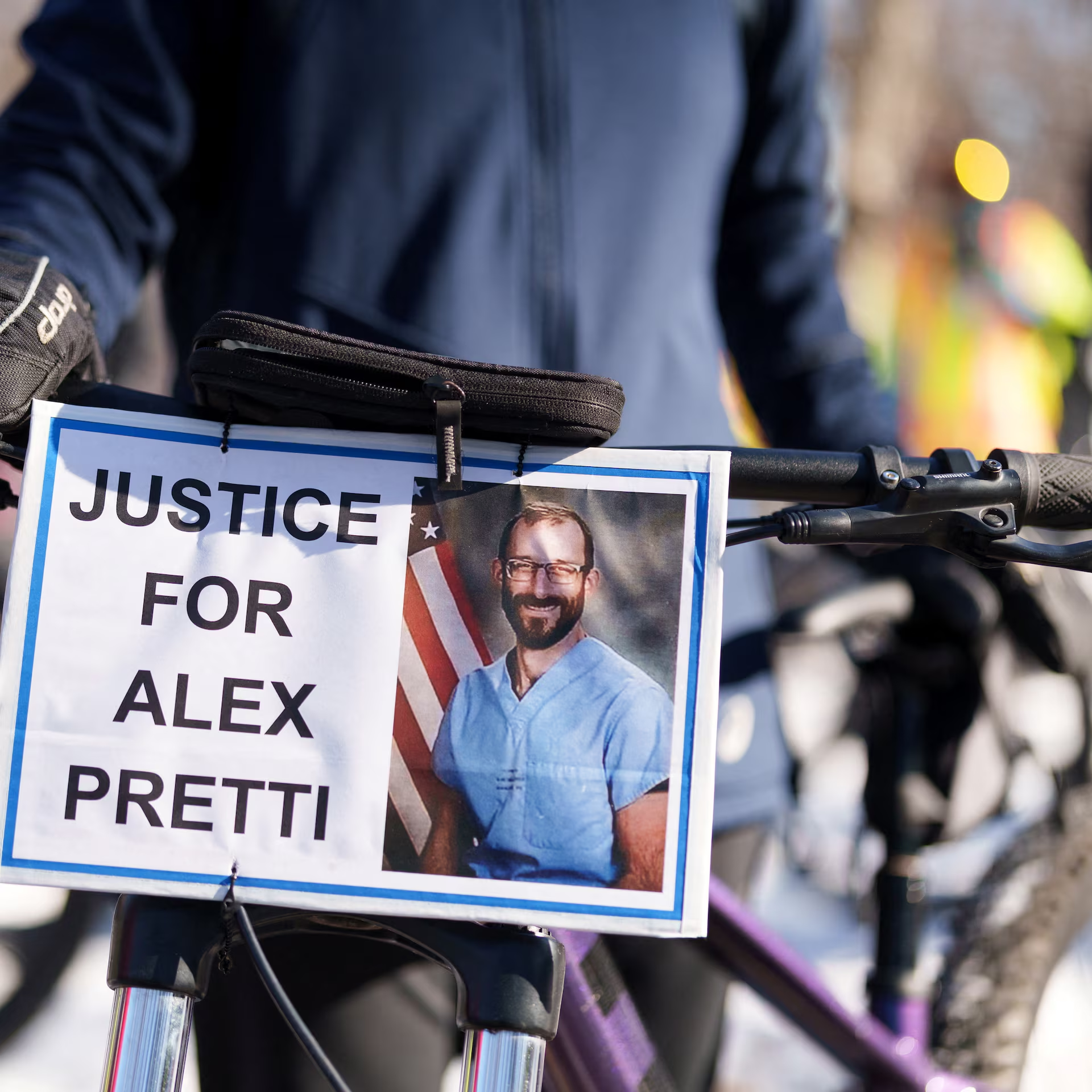
On a quiet morning, the sound of bicycle wheels rolling across pavement became something more than a routine rhythm. In cities and small towns across the United States, people gathered not to race, not to compete, but to remember. Photos of Alex Pretti were carefully attached to bike frames, handlebars, and backpacks. Some riders wore white. Some carried flowers. Others rode in silence. Together, they pedaled forward — for Alex.
What began as a small, local gesture quickly grew into a nationwide movement. From Minneapolis to Portland, from New York to Los Angeles, community-organized bicycle rides emerged as a collective act of remembrance. These were not protests fueled by anger, nor were they loud demonstrations. They were something quieter, heavier, and perhaps more powerful: a shared expression of grief, solidarity, and an urgent call for peace.
Alex Pretti’s story touched people far beyond those who knew him personally. His name became a symbol — not of statistics or headlines, but of a life cut short, of unrealized dreams, of the devastating cost of violence. For many, riding a bicycle with Alex’s photo was a way to say: We see you. We remember you. You mattered.
In Minneapolis, riders gathered at dawn, forming a long line that stretched across neighborhood streets. No one shouted slogans. No horns blared. The only sound was the steady turning of pedals and the wind brushing past laminated photographs of Alex’s smiling face. Passersby stopped. Some placed their hands over their hearts. Others joined spontaneously, walking alongside the riders for a block or two, unwilling to let the moment pass unnoticed.
Similar scenes unfolded across the country. In Chicago, cyclists paused at intersections to hold a moment of silence. In Austin, riders wrote messages on cardboard signs tied to their bikes: “Ride for Alex.” “End the violence.” “Remember his name.” In San Francisco, candles were lit at the finish point, creating a glowing circle where strangers hugged, cried, and shared stories — not just about Alex, but about loss, fear, and the hope that things can change.
For many participants, the bicycle itself carried deep meaning. Riding is an act of movement, of effort, of balance. It requires attention, care, and cooperation with the world around you. To ride together is to trust one another. To ride in memory of someone lost is to refuse stillness — to insist that grief can move, that remembrance can travel, that a single life can inspire collective action.
Parents rode with children seated behind them, explaining in gentle words why today’s ride was different. College students pedaled beside retirees. Athletes rode next to people who hadn’t been on a bike in years. There was no single demographic, no unified political message. What connected them was simple and human: empathy.
Social media soon filled with images from these rides. Photos of bikes lined up in long rows. Close-ups of Alex’s face fluttering in the wind. Captions written through tears: “I didn’t know Alex, but today I rode for him.” “We ride so we don’t forget.” “This should not keep happening.” Each post extended the reach of the movement, turning local acts of remembrance into a shared national narrative.
Family members and friends of Alex expressed gratitude and disbelief at the scale of the response. In statements shared online, they spoke of heartbreak mixed with comfort — comfort in knowing that Alex’s life had sparked compassion in people he never met. They emphasized that the rides were not about politics, but about humanity. About choosing care over indifference.
These memorial rides also served as a quiet challenge to a culture that often moves on too quickly. In a news cycle driven by the next headline, the next tragedy, the next distraction, choosing to slow down and remember is an act of resistance. Attaching Alex’s image to a bicycle is a refusal to let his name fade into obscurity.
At several rides, organizers ended with a simple request: Take this feeling with you. Let it inform how you treat others. Let it guide your conversations. Let it remind you that behind every name is a family, a history, a future that deserved more time.
As the rides concluded, participants dispersed back into their daily lives. The bikes were parked. The photos were carefully removed and saved. But something lingered. A shared understanding. A collective ache. And a quiet determination that remembrance should lead to change, not just mourning.
Across America, they rode for Alex. Not because they had all the answers. Not because a bicycle ride can fix what is broken. But because moving together, even briefly, felt better than standing still in silence.
And as long as people continue to ride — to remember, to care, to hope — Alex Pretti’s name will not be forgotten.