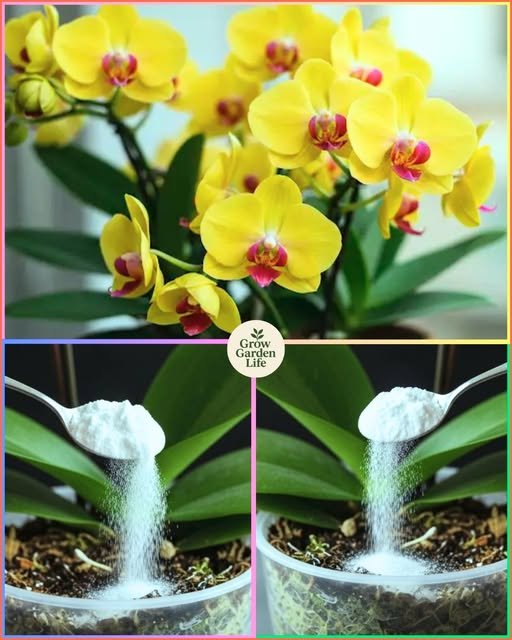
Have you ever looked at your orchid and thought it was beyond saving?

Wrinkled leaves. Mushy roots. No growth for months.
I almost threw mine away — until I tried a simple “1 spoon” method that completely changed everything. Within weeks, new roots started appearing, and the plant slowly regained strength.
Here’s the full step-by-step guide.
First: Understand Why Orchids “Die”
Most orchids (especially Phalaenopsis) decline because of:
- Overwatering
- Compacted old potting mix
- Root rot
- Lack of airflow around roots
When roots suffocate, the plant can’t absorb water — even if you’re watering regularly.
So revival always starts with the roots.
The 1-Spoon Method (Rice Water Boost)
The “magic spoon” is 1 tablespoon of diluted rice water.
Rice water contains small amounts of:
- Vitamins
- Trace minerals
- Mild natural starches that support beneficial microbes
It’s not a miracle cure — but it gently stimulates recovery when used correctly.
Step 1: Remove and Inspect the Roots
- Take the orchid out of its pot.
- Rinse off old bark.
- Trim away soft, brown, mushy roots.
- Keep only firm, green or silver roots.
Healthy roots feel firm — not hollow.
Step 2: Repot in Fresh Orchid Bark
Use:
- Chunky orchid bark
- A clear pot with drainage holes
Orchids need airflow. Never use regular garden soil.
Position the crown above the mix to prevent rot.
Step 3: Apply the 1-Spoon Boost
Mix:
- 1 tablespoon rice water
- 1 liter clean water
Water the orchid lightly with this mixture once every 2–3 weeks.
Important:
- Never use undiluted rice water
- Do not overwater
- Allow bark to dry slightly between watering
Too much moisture will undo all progress.
Step 4: Provide Ideal Recovery Conditions
For fast root growth:
Bright, indirect light
Warm temperatures (65–80°F / 18–27°C)
Moderate humidit Good air circulation
Within a few weeks, you may notice tiny green root tips emerging.
That’s the sign your orchid is recovering.
When Will It Bloom Again?
Root recovery comes first.
Once the plant regains strength and produces healthy leaves, a flower spike may appear during the next blooming cycle.
Be patient — orchids bloom when stable, not stressed.
Extra Tips for Faster Root Growth
- Wipe leaves occasionally to improve photosynthesis
- Avoid moving the plant frequently
- Feed lightly with balanced orchid fertilizer once recovery begins
Consistency matters more than intensity.
Final Thoughts
No orchid is truly “dead” unless the crown is completely rotted.
With root cleanup, proper repotting, and a gentle 1-spoon boost, even a struggling plant can rebound beautifully.
Sometimes all it needs is the right reset — not more water.
Would you try this method on your orchid